Open Today Sales: 9 AM-7 PM


Hours:
Open Today Sales: 9 AM-7 PMService: Closed
Location
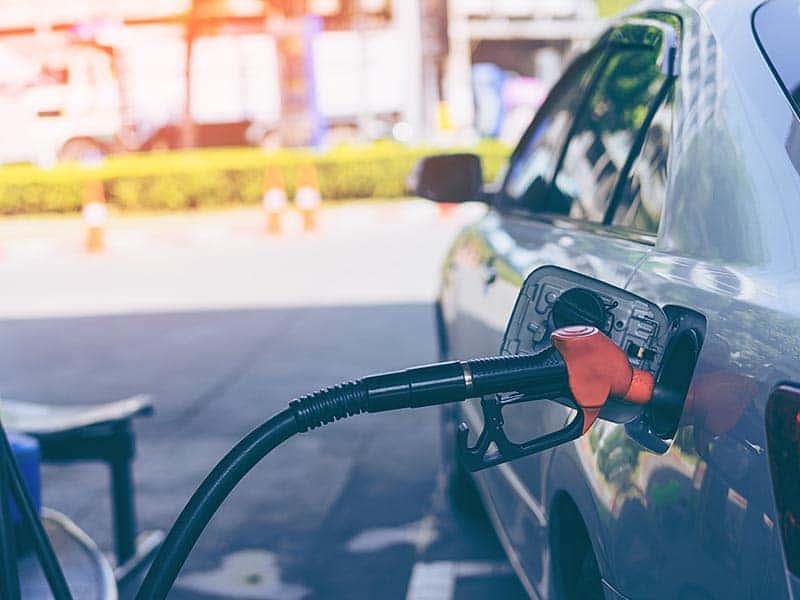 Professional fuel system service is necessary when an engine displays active performance symptoms like persistent hesitating under acceleration, rough idling, misfiring, or a check engine light, or when factory maintenance guidelines specify fuel filter replacement. Modern vehicles do not require arbitrary or universal fuel injector cleaning at set calendar intervals. Instead, professional service is warranted when diagnostic testing identifies restricted fuel flow, uneven spray patterns, or carbon buildup, or when scheduled maintenance calls for filter servicing.
Vehicle owner’s manuals detail the precise service intervals for fuel filters, which vary significantly by powertrain, model year, and whether the filter is located externally along the fuel line or integrated into the fuel pump housing inside the tank. Drivers should follow these factory recommendations rather than assuming every vehicle needs periodic chemical flushes. Furthermore, although California gasoline must meet strict state standards under federal fuel regulations (40 CFR Part 1090 Subpart C — Gasoline Standards), special regional fuel formulations alone do not serve as proof that fuel injectors require routine cleaning.
When performance issues arise while driving along the rolling hill climbs in Mission Viejo, an underlying fuel delivery issue may be present. A restricted fuel flow starves combustion chambers of necessary fuel, leading to noticeable hesitation when ascending elevation under heavy throttle. Rather than attempting unproven pour-in chemical treatments, having certified technicians perform accurate diagnostic checks ensures that underlying causes—whether a clogged filter, failing fuel pump, or contaminated injectors—are pinpointed correctly.
To discuss your vehicle’s specific maintenance schedule or consult with our factory-trained service advisors, you can reach our team directly at 949-359-4941 or visit our state-of-the-art facility; for effortless navigation, view our service center location before driving in.
 The key signs of a clogged fuel system include engine misfires, sluggish throttle response, sputtering during acceleration, hard starting, and illuminated dashboard diagnostic lights. Mechanics identify fuel delivery issues by running pressurized flow drop tests, checking fuel rail pressure with specialized gauges, and reading diagnostic codes.
When fuel injectors become partially restricted by varnish or carbon deposits, fuel atomization breaks down. Instead of emitting a fine, pressurized mist that mixes seamlessly with incoming air, a clogged injector delivers larger, uneven droplets. This localized lean condition prevents proper combustion within individual cylinders. Drivers frequently experience this as a distinct stumble or hesitation when pressing the accelerator pedal.
On modern vehicles, electronic control units monitor cylinder balance continuously. Restrictive fuel flow triggers diagnostic trouble codes P0300 (random cylinder misfire) or P0171 (system running too lean). When mechanics test for fuel system restrictions, they evaluate several parameters:
Drivers striving for optimal efficiency across daily commutes often check our fuel-efficient vehicle options or consult our knowledgeable parts department professionals for genuine replacement filters and factory-approved components.
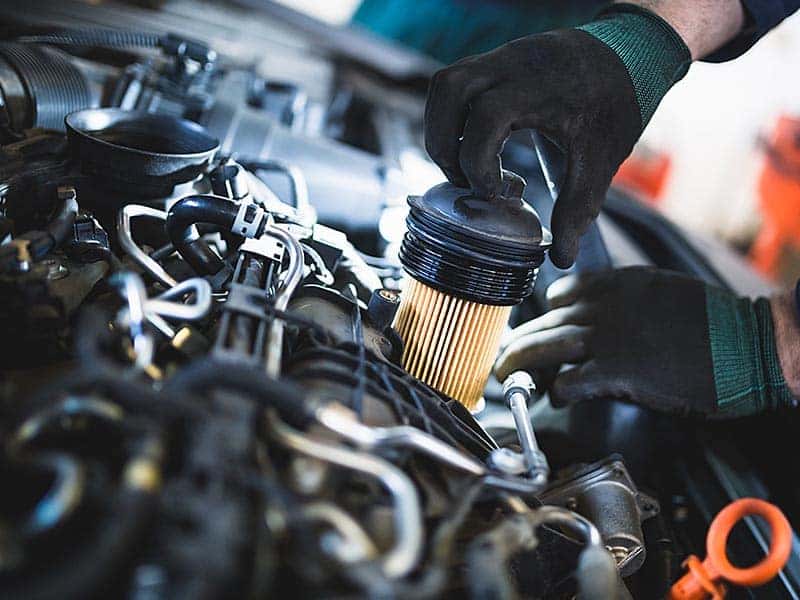 Ignoring a dirty or restricted fuel system leads to severe engine knocking, premature spark plug fouling, catalytic converter damage from lean combustion heat, and potential electric fuel pump failure. Over time, unaddressed fuel starvation causes compound mechanical damage that far exceeds the effort of timely maintenance.
When fuel injectors are clogged or a fuel filter becomes heavily restricted, the engine operates in a prolonged lean state, meaning the ratio of air to fuel contains too much air. Lean combustion burns at significantly higher temperatures than normal fuel-air mixtures. Excess heat inside the combustion chamber leads to premature detonation, commonly called engine knock, which places destructive mechanical stress on pistons, connecting rods, and wrist pins.
Additionally, persistent lean misfires allow unburned oxygen and raw fuel vapor to enter the exhaust stream. When these vapors reach the catalytic converter, they ignite on the superheated ceramic substrate, causing internal temperatures to surge well beyond normal operating limits. This thermal stress can melt internal honeycomb structures, restricting exhaust flow and causing complete catalytic failure.
Fuel pump longevity is also severely compromised by neglected fuel filters. An electric fuel pump relies on a continuous flow of fuel passing through it for lubrication and cooling. When an in-line or in-tank fuel filter becomes clogged, the pump must work under significantly higher head pressure to push fuel through the blockage. The resulting heat buildup and electrical strain rapidly wear out pump armatures and internal seals, leading to sudden fuel pump failure that leaves the vehicle stranded.
Professional fuel system cleaning restores engine power and gas mileage by removing stubborn carbon deposits from injector nozzles, throttle bodies, and intake pathways using pressurized cleaning chemicals and specialized equipment. Unlike simple pour-in additives, professional bench or direct-rail services physically dissolve baked-on varnish to restore original fuel atomization.
During a professional direct-rail service, technicians disable the vehicle’s internal fuel pump and connect a pressurized canister filled with concentrated solvent directly to the engine’s fuel rail. The engine runs solely on this high-potency cleaning chemical for 20 to 30 minutes. As the pressurized solution pulses through the injector tips under high operating pressures, it breaks down hardened microscopic carbon buildup and lacquer deposits on the tiny metering orifices.
For vehicles equipped with Gasoline Direct Injection (GDI) engines, cleaning requirements are even more specialized. Because GDI systems spray fuel directly into the combustion chamber rather than upstream into the intake port, fuel never washes over the back of the intake valves. As a result, oil vapors from the crankcase ventilation system accumulate and bake onto hot intake valve stems, forming thick carbon crusts that restrict airflow.
To resolve valve deposits in direct-injection engines, professional service utilizes specialized chemical fogging foam introduced directly into the intake manifold or mechanical walnut shell blasting. Walnut blasting directs compressed air laden with fine walnut shell media into closed intake ports to gently abrade away carbon buildup without damaging aluminum engine components. This process restores volumetric efficiency, sharpens throttle response, and brings fuel economy back toward original factory specifications. Drivers navigating coastal terrace routes around San Clemente notice an immediate return of crisp throttle delivery and smooth, linear power output during elevation changes.
Proper fuel system care requires understanding specific diagnostic indicators, engine technologies, and factory maintenance guidelines. Below are clear answers to the most common questions regarding fuel system health, cleaning methods, and filter replacement schedules.
Yes, a professional fuel system service can restore lost fuel economy if carbon buildup or clogged fuel injectors are preventing efficient fuel atomization. When deposits distort spray patterns, fuel does not mix completely with air, causing incomplete combustion and wasted fuel. Cleaning and restoring correct spray patterns allows the engine management system to maintain optimal air-fuel ratios, bringing gas mileage back to factory levels.
Direct injection engines spray fuel directly into combustion chambers, meaning gasoline never contacts the intake valves to wash away oil deposits. Over time, crankcase ventilation vapors accumulate on hot valve stems and ports, forming dense carbon crusts that restrict airflow. Specialized intake valve cleaning—such as chemical induction or walnut shell blasting—is necessary because standard fuel tank additives cannot reach the dry intake valves.
Pour-in fuel tank additives can help prevent light varnish formation in traditional port-fuel-injected engines and keep fuel lines clean. However, additives poured into the gas tank cannot clean intake valves on direct injection engines, nor can they clear heavy, hardened carbon buildup from neglected injectors. They serve best as low-cost preventative maintenance rather than a cure for existing performance issues or severe clogs.
External in-line fuel filters generally require replacement every 20,000 to 40,000 miles according to specific manufacturer schedules. Integrated in-tank fuel filters, however, are typically designed to last up to 100,000 miles or the lifetime of the fuel pump assembly. Always consult your vehicle’s specific owner’s manual to verify the correct interval for your powertrain.
In-tank fuel filters are integrated directly into the fuel pump module inside the gas tank. Replacing them requires dropping the heavy fuel tank from beneath the chassis or removing rear passenger seats and interior carpeting to access the fuel pump service hatch. The substantial labor hours required to access and dismantle the fuel module make in-tank filter service significantly more labor-intensive than replacing an accessible underbody filter.
Maintaining your fuel system with proper diagnostics and factory-recommended filter care protects long-term engine performance and prevents expensive roadside failures. If your vehicle is experiencing hesitation, reduced fuel efficiency, or rough running, our team is ready to deliver precise, factory-grade diagnostic testing. You can easily schedule service online, give our service department a call at 949-359-4941, or stop by our Mission Viejo location for expert care tailored to your luxury vehicle.
© 2026 Land Rover Mission Viejo. All rights reserved.
*All mileage is EPA estimated.