Open Today Sales: 9 AM-7 PM


Hours:
Open Today Sales: 9 AM-7 PMService: Closed
Location
A coolant flush is necessary for routine vehicle maintenance whenever specified by your owner’s manual or when fluid degradation, chemical breakdown, and internal contamination occur. While standard drain and fill services refresh partial fluid volume, a full coolant flush replaces virtually 100% of aged antifreeze, neutralizing acidic buildup and restoring essential anti-corrosion additives to protect critical cooling components.
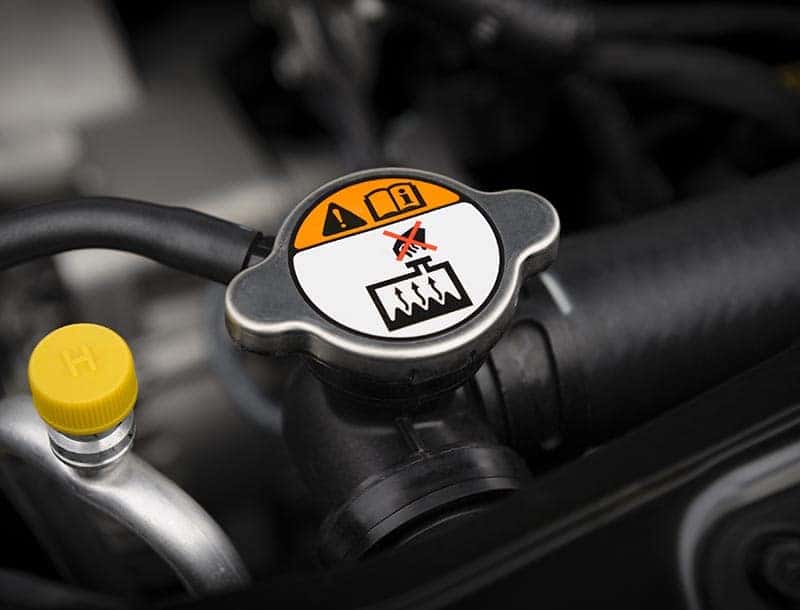
Engine coolant serves as a vital thermal regulator year-round, maintaining correct operating temperatures during summer heat and preventing freeze-ups during cold snaps. According to AAA maintenance guidelines, coolant level should be inspected when the engine is stone cold, as removing a radiator cap on a hot, pressurized system can vent scalding steam and cause severe burns. Fluid level ought to rest consistently between the minimum and maximum indicator lines on the translucent expansion tank, free of rust sediment or floating debris.
During visual checks, rubber hoses require careful inspection for surface cracks, fluid weeping, loose clamps, or sections that feel unnaturally brittle or spongy under pressure. Drivers negotiating the rolling hills and suburban stop-and-go driving around Mission Viejo place consistent thermal demands on their engines. When fluid levels repeatedly drop, our service advisors remind drivers that continually topping off the reservoir without locating the source can allow a minor leak to turn into severe thermal overload.
When your vehicle approaches its service milestone or exhibits fluid discoloration, getting expert guidance ensures your engine stays protected. You can speak with our factory-trained technicians directly by calling 949-359-4941 or drop by our Mission Viejo service center for a complete cooling system evaluation.
A coolant drain and fill relies on gravity to empty fluid from the radiator drain plug, removing roughly 50% to 70% of total system volume, whereas a full coolant flush uses specialized pressurized equipment to exchange nearly 100% of aged fluid throughout the engine block, heater core, and internal galleries.
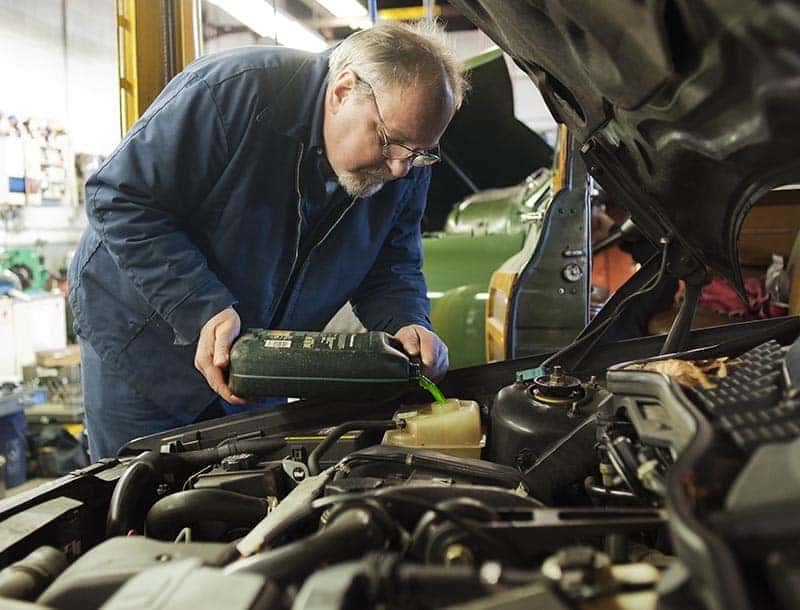 While a basic drain and fill is often sufficient for early preventative care on low-mileage vehicles with clean fluid, it leaves significant amounts of old antifreeze trapped inside the engine water jackets and heater core. Over thousands of operating miles, thermal cycling depletes protective anti-corrosion additives and anti-foaming agents. When fresh antifreeze is simply poured into a system containing residual degraded fluid, the remaining acidity shortens the life of the new mixture.
A chemical coolant flush elevates this service by circulating a dedicated cleaning compound through the system prior to fluid extraction. This specialized chemical flush dissolves stubborn scale deposits, rust oxidation, and oily sludge adhering to internal passages before flushing out the debris under controlled pressure.
Most original equipment manufacturers specify simple drain and fill procedures at routine inspection intervals for clean systems, but mandate comprehensive flushes when fluid exhibits contamination or chemical breakdown. Modern luxury vehicles utilize advanced Organic Acid Technology (OAT) or Hybrid Organic Acid Technology (HOAT) formulas engineered for aluminum engine blocks. Mixing older silicate-based green or blue coolants with long-life OAT formulas creates a thick gelatinous sludge that rapidly blocks narrow cooling channels.
Aged and contaminated engine coolant severely damages radiator passages and heater cores because its protective anti-corrosion additives break down over time, creating acidic conditions that erode internal metal, build scale, and clog restricted cooling channels.
As corrosion inhibitors exhaust themselves, chemical pitting and galvanic electrolysis begin attacking internal cooling components. In the radiator, dirty fluid leaves behind heavy scale deposits that coat the inside of thin aluminum tubes. This layer acts as an insulator, reducing heat transfer efficiency and forcing the engine to run hotter. Over time, chemical corrosion eats through tube walls, leading to pinhole leaks and structural failure at the joint where plastic end tanks meet the metal radiator core.
Heater core failure follows a similar path but carries distinct symptoms inside the passenger cabin. Mounted deep behind the dashboard, the heater core functions like a miniature radiator designed to warm incoming cabin air. Because heater core tubes feature narrow internal diameters, suspended sludge and rust flakes settle quickly in these low-flow channels. Once clogged, hot coolant cannot circulate through the core, depriving the heating system of thermal energy and leaving passengers with cold air during winter drives.
According to AAA technical advisories, inspecting coolant reservoirs for rust particles or oil suspension helps catch fluid breakdown before internal passages suffer irreversible harm. Vehicles driven near San Clemente endure marine air along coastal terraces, making robust internal corrosion protection even more critical for long-term component survival.
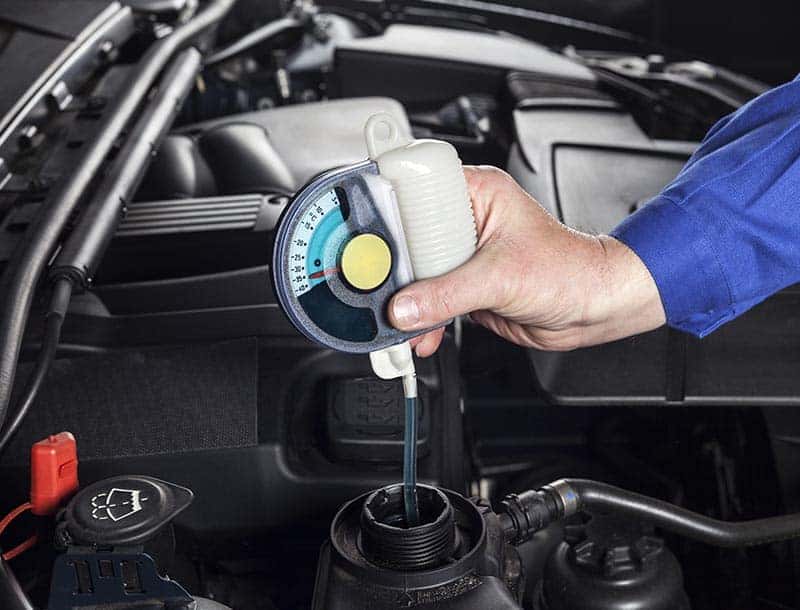 A professional coolant flush typically costs between $150 and $250, making it a highly cost-effective preventive investment compared to repairing an overheated engine, which routinely exceeds $1,500 to $4,000 for head gasket replacements or warped cylinder head machining.
Ignoring cooling system maintenance allows acidic fluid to degrade internal seals and water pump impellers, eventually leading to sudden overheating. When an engine runs without adequate cooling, extreme temperatures cause metal components to expand beyond engineered tolerances. This thermal stress warps cylinder heads, blows head gaskets, and can even crack the engine block itself—resulting in catastrophic mechanical failure and extensive labor charges.
It is worth noting that a coolant flush price covers fluid exchange and system cleaning, not physical leak repairs. If an inspection reveals a leaking radiator hose, faulty water pump seal, or cracked thermostat housing, those parts must be replaced separately. To keep your engine operating reliably, you can schedule a service appointment online, source genuine replacement components through our factory parts department, or pair your cooling maintenance with routine cabin air filter replacement for total vehicle care.
Factory maintenance intervals vary by vehicle design and coolant type, ranging from every 30,000 miles to 60,000 miles for standard maintenance schedules, or up to 100,000 miles for long-life Organic Acid Technology (OAT) formulas. Checking your owner manual provides the exact mileage threshold. Our certified technicians review fluid age, pH balance, and clarity during multi-point inspections to ensure protection remains optimal.
Yes, adding a dedicated chemical flush treatment before performing a fluid exchange actively dissolves rust oxidation, mineral scale deposits, and oil residue from internal engine water jackets. This chemical cleaning action breaks down stubborn buildup that standard water rinses cannot remove, allowing pressurized service equipment to sweep impurities out of the cooling system before fresh fluid is added.
Coolant services exceed $300 when vehicles require high-capacity fluid fills of specialized factory-approved antifreeze, intensive chemical flush treatments, or extended labor for air purging. Complex luxury cooling systems require vacuum-assisted bleeding to purge trapped air pockets that cause false gauge readings and dangerous hot spots. The price reflects specialized equipment, extended labor, and high-performance fluid requirements.
Flushing old coolant clears out accumulated sludge, gel, and sediment that restrict fluid circulation inside the heater core. Because the heater core relies on a continuous flow of hot engine coolant to warm the passenger cabin, restoring unrestricted flow directly enhances heater output and ensures consistent interior heating performance during cold weather.
No, a coolant flush fee covers the fluid exchange service and chemical cleaning process, not the repair of leaking mechanical parts. If our technicians identify a failing water pump, cracked radiator tank, or degraded hose, replacing those components requires separate parts and labor charges. Fixing active leaks first ensures new fluid remains securely sealed inside the system.
Preventative maintenance remains the single most effective way to safeguard your engine against thermal breakdown and costly internal repairs. By replacing degraded antifreeze before corrosion and scale build up, you preserve optimal heat transfer, protect delicate radiator tubes, and maintain dependable performance in every driving condition.
Our factory-trained technicians at Land Rover Mission Viejo utilize specialized diagnostic equipment, factory-approved fluid blends, and precision bleeding procedures tailored specifically to your vehicle. Whether you need a routine inspection or a comprehensive system flush, our team is ready to deliver expert care. Visit us at 28701 Marguerite Pkwy Mission Viejo, CA 92692 or call 949-359-4941 to speak with our service team and confirm your next maintenance appointment.
© 2026 Land Rover Mission Viejo. All rights reserved.